The Fabric of Care
The Fabric of Care invites participants onto a stage where nothing is decided in advance: there is no defined set, no fixed seating and no assigned roles. Clothes and fabrics can be moved, placed, hung or worn to shape a space that feels more or less comfortable or welcoming. There is no correct way to do this. What matters is how people create with others: how they cooperate, negotiate and care with one another. The work considers clothes as materials of protection and identity, while also attending to the environmental and social consequences of their production and distribution.
Participatory performance · 45 min
ArtEZ · 16 April 2026
Participatory performance · 45 min
ACU · 3 May 2026
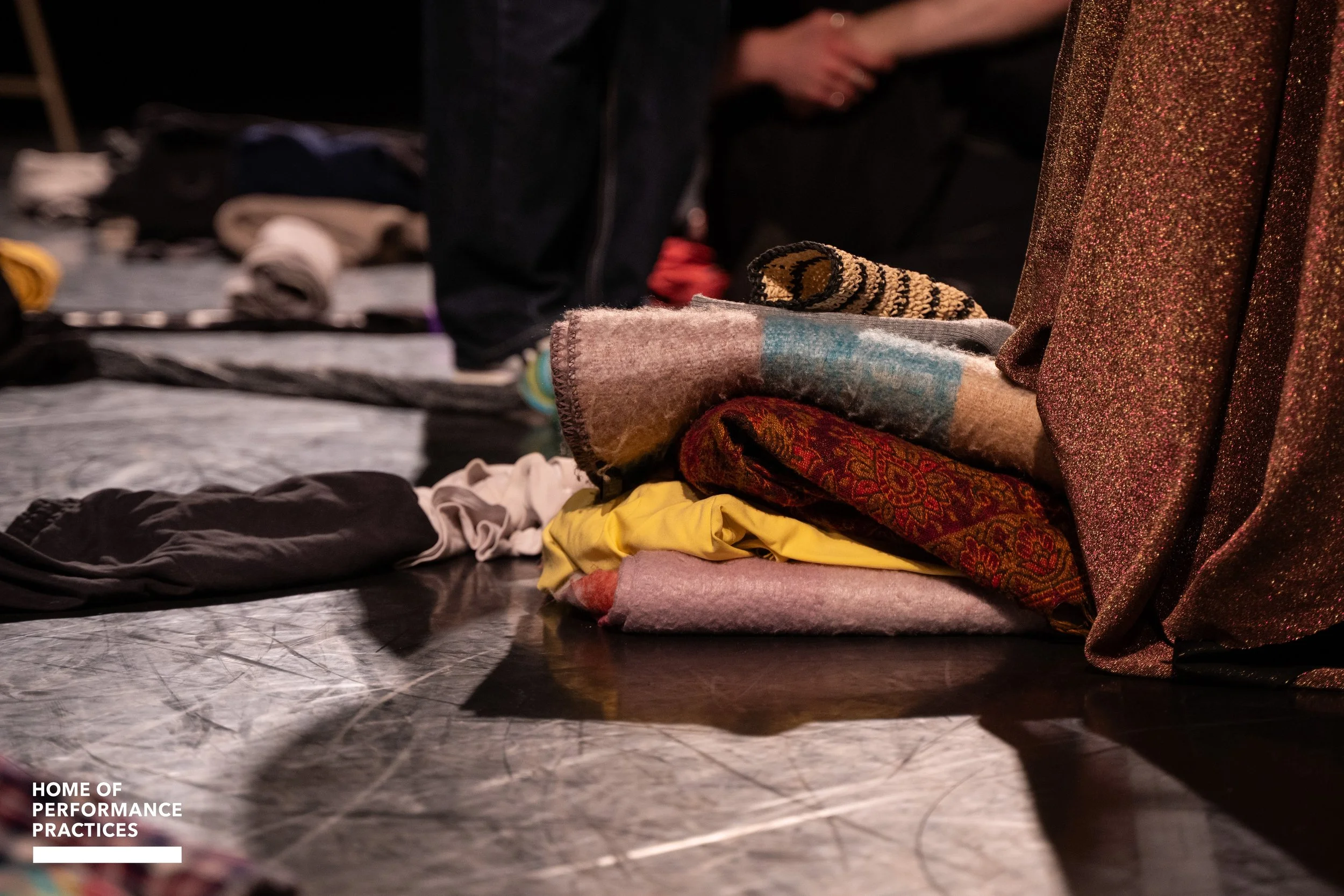
© Steef Kersbergen, ArtEZ
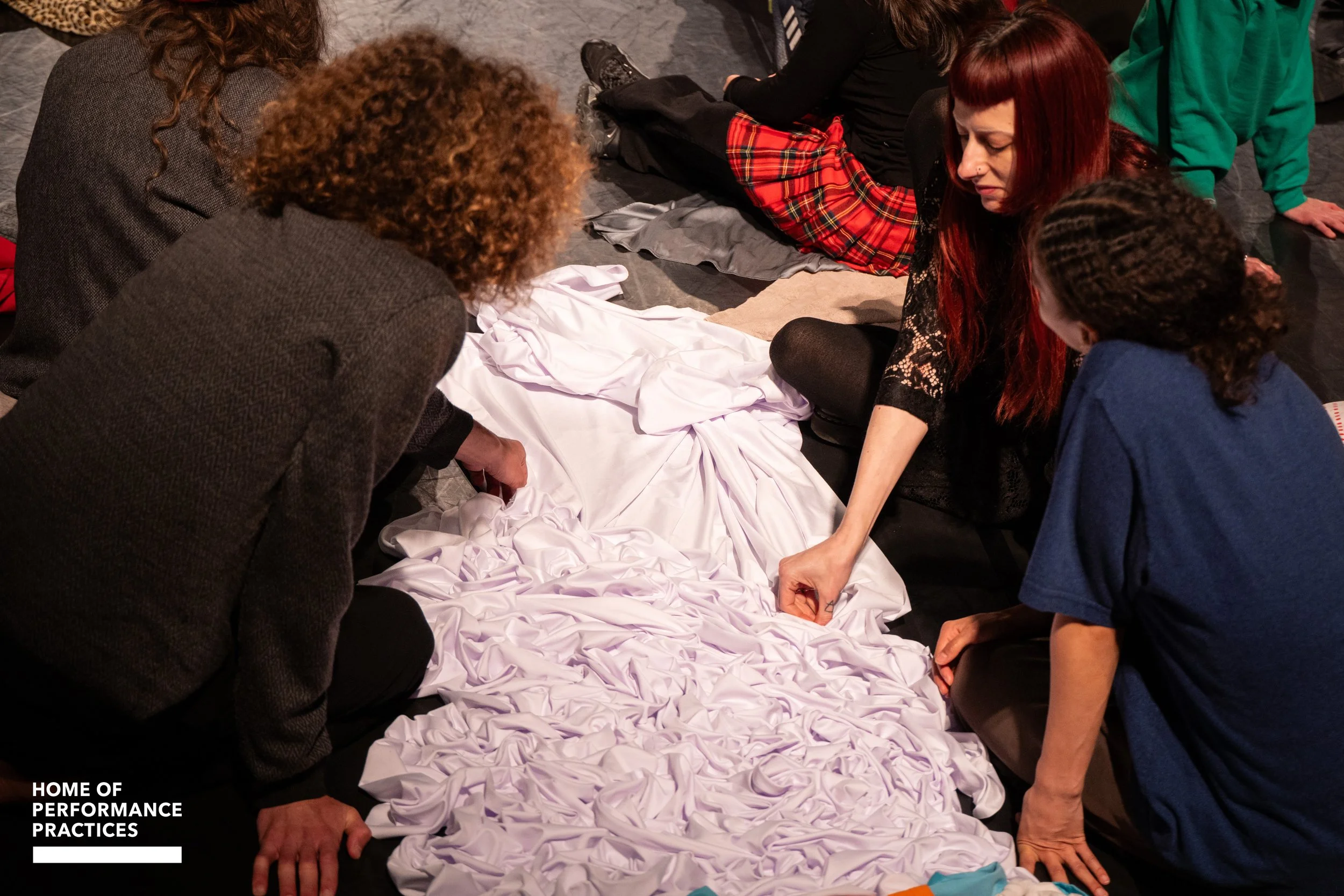
© Steef Kersbergen, ArtEZ
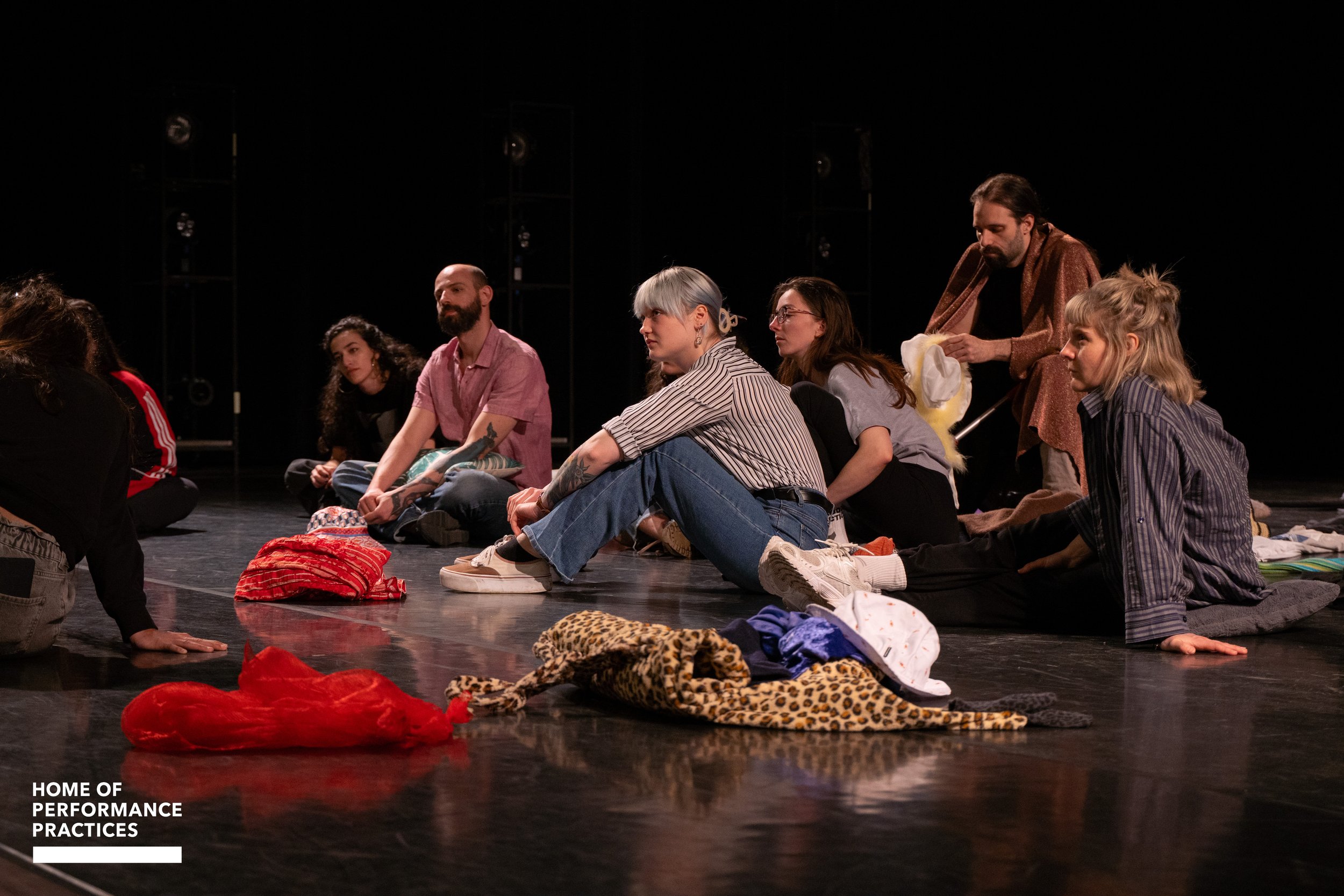
© Steef Kersbergen, ArtEZ
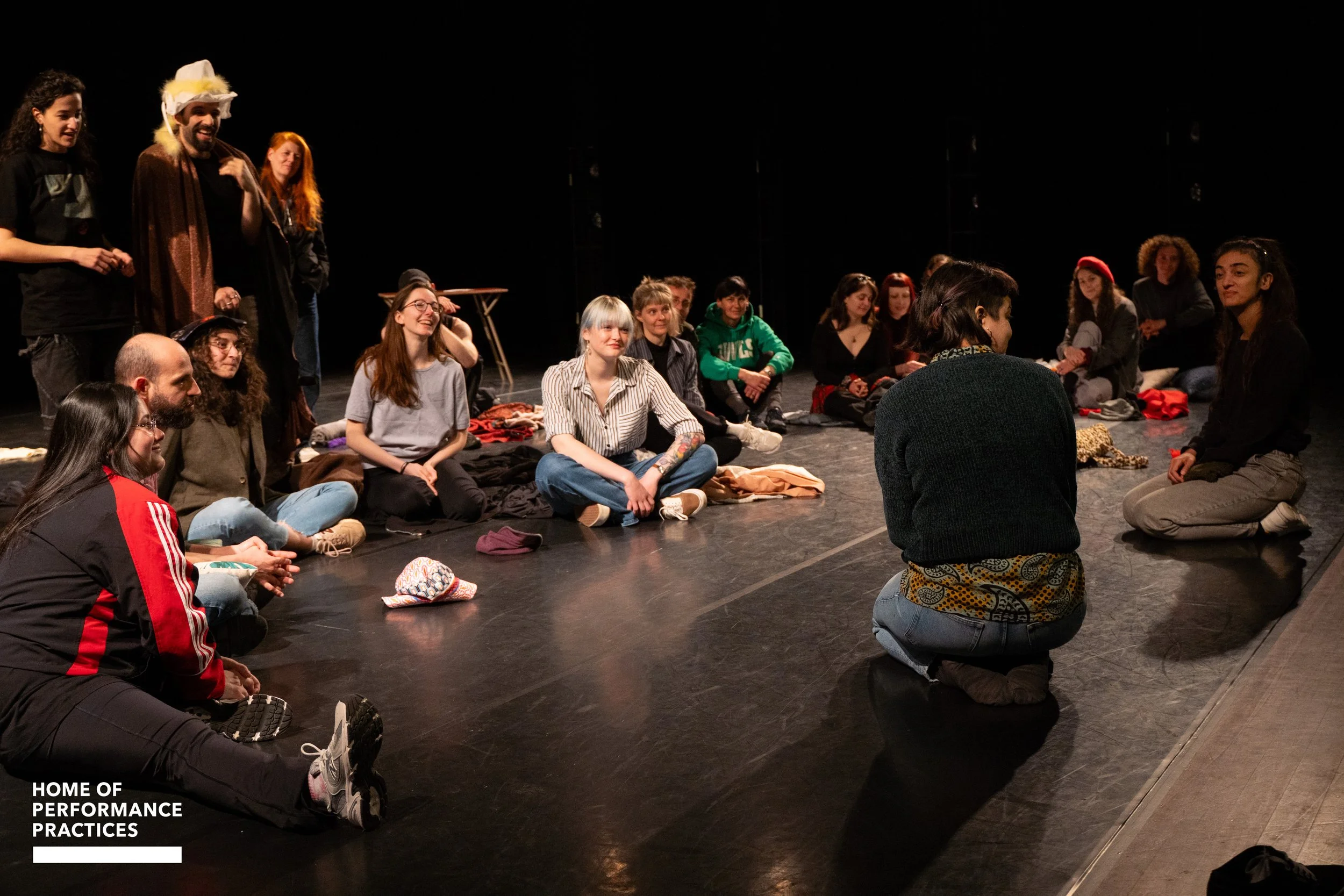
© Steef Kersbergen, ArtEZ
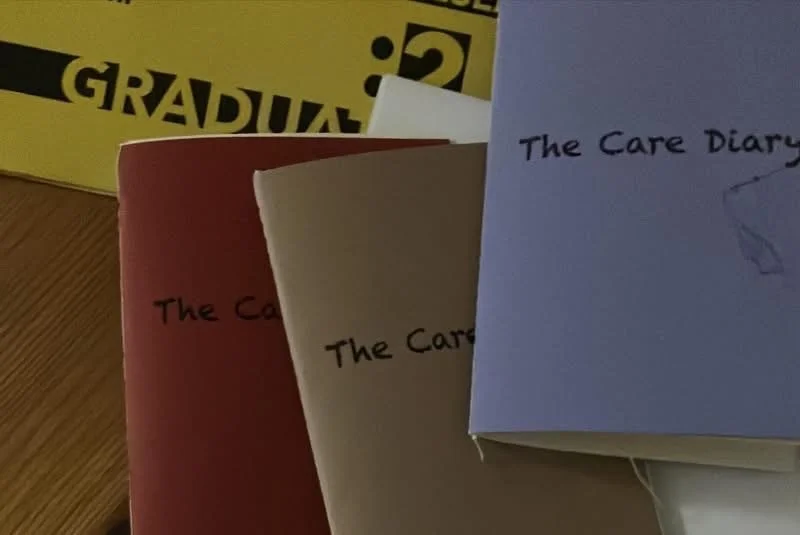
© Joana Cunha Pinto, ArtEZ
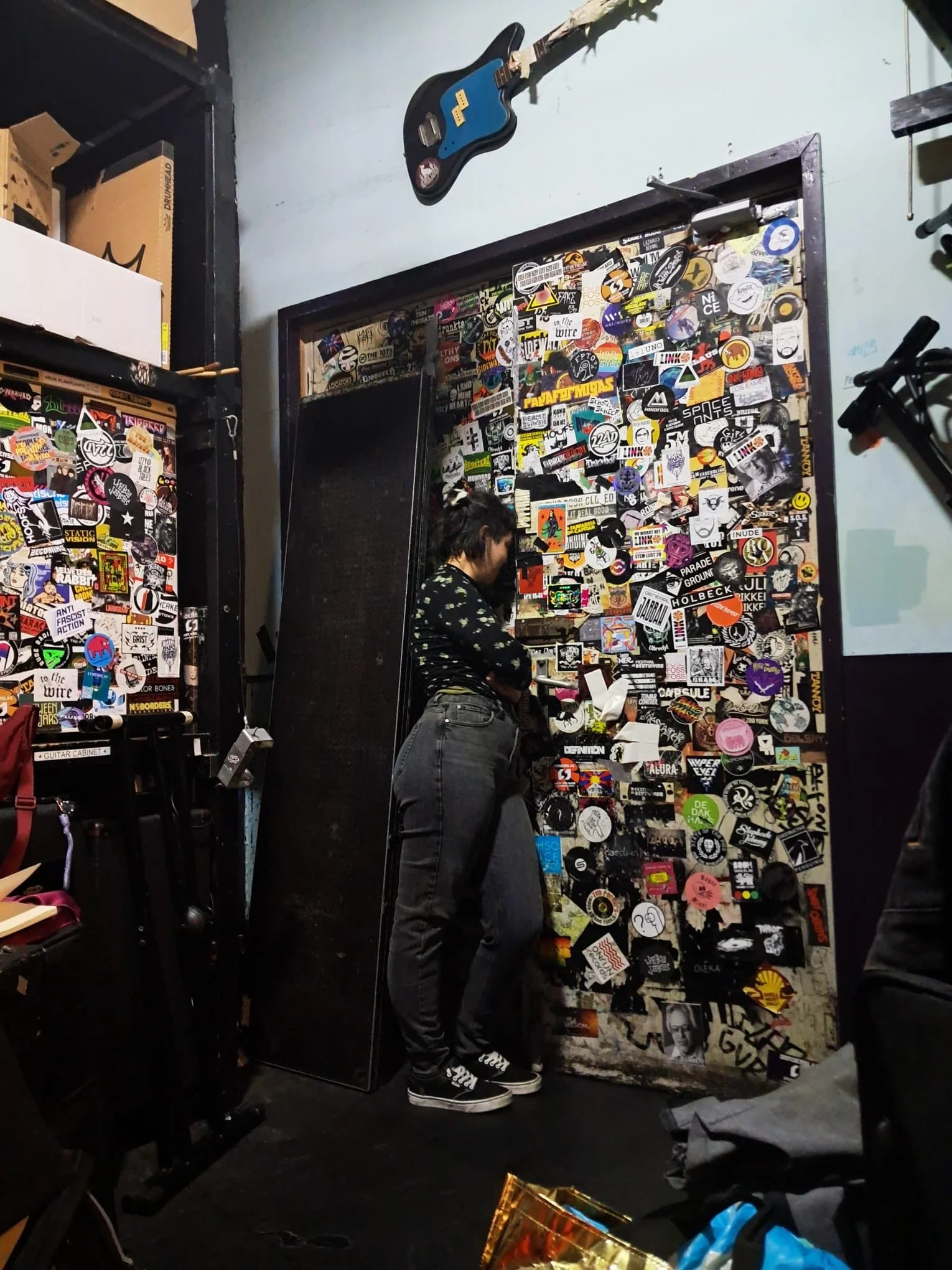
© Joana Cunha Pinto, ACU
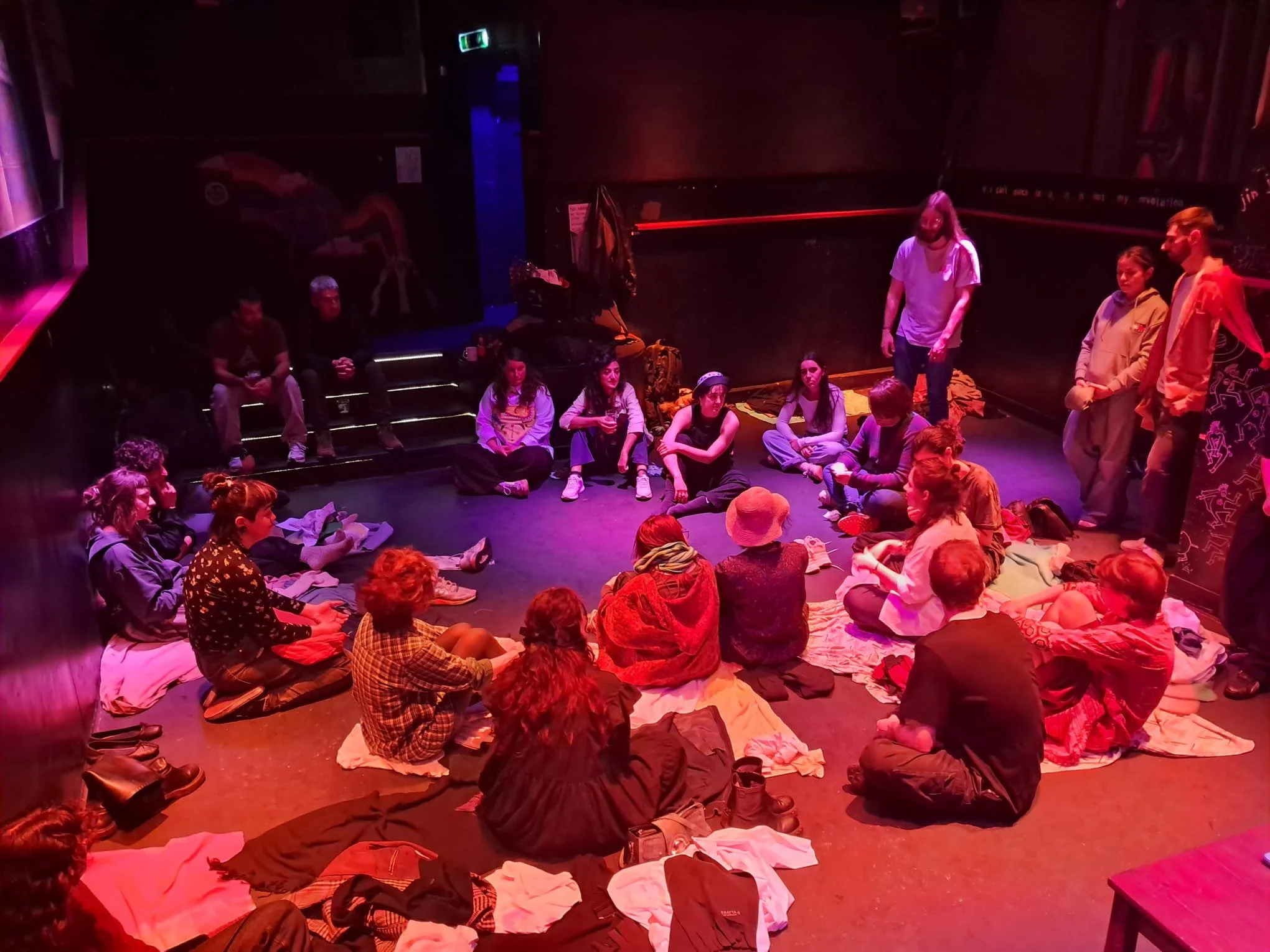
© Joana Cunha Pinto, ACU
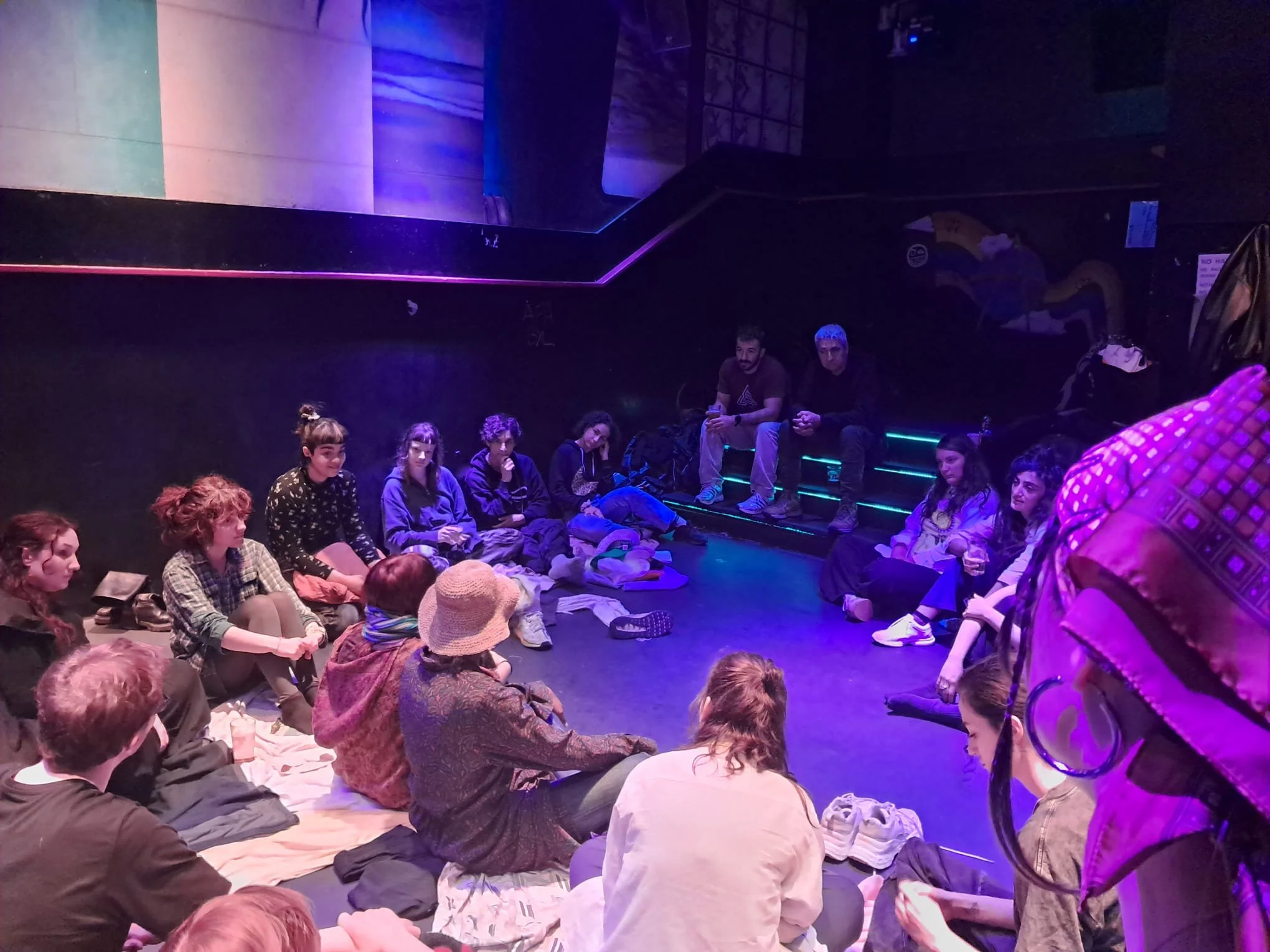
© Joana Cunha Pinto, ACU
Presented as part of the Expositions of Artistic Research — Finals at ArtEZ University of the Arts, The Fabric of Care develops the notion of care with as a shared and continually negotiated practice of attention, responsibility and coexistence. Drawing on Joan Tronto’s political theory of care, the work approaches care not as something offered by one person to another, but as a question of how responsibility is distributed within a temporary collective.
The performance uses a semi-structured score in which clothing and fabric function as shared materials. Influenced by Maurice Hamington’s connection between care and improvisation, the score creates conditions for participants to respond to one another through small decisions: whether to approach or withdraw, how to share an object, how to make space, and how to notice the comfort or discomfort of others.
The work also draws on Yuriko Saito’s everyday aesthetics and on Ivana Müller’s participatory methodologies. Clothes are approached as everyday objects that carry protection, identity, labour and environmental consequence. The absence of a central performer shifts attention towards the temporary common formed by the participants, while leaving open the question of how much structure is needed for shared responsibility to emerge.
A later iteration of The Fabric of Care at ACU in Utrecht takes the work outside its university context. Encountered by a different group of participants, the score produces different relations, rhythms and ways of sharing the space. This iteration reinforces the work’s central question: care with does not exist as a fixed outcome of the score, but is shaped through the particular conditions, expectations and relations of each encounter.
Performing invigilator: Joana Cunha Pinto
Invigilators: Sofia Apostolidou and Lida Draganigou
Technical support: Irina Baldini, Okke van Breemen
External mentor: Ivana Müller
Supervisor: Dr. Anja Foerschner